Consent Is an Ongoing Conversation

During consent workshops in first-year courses, we ask students to share what they learned about consent before coming to Widener. “Permission” and “no means no!” are the most common answers. But as the conversation continues, students point out that defining consent as simply “no means no” or “yes means yes” is too limited.

There are many ways to express a “no” other than the word “no” – and there are many reasons people say “yes” when they don’t want to, including peer pressure, power dynamics, and people-pleasing.
Besides, consent isn’t just a one-time question or a one-time “yes” or “no” answer. It's an ongoing conversation!
Consent means that someone feels a sense of autonomy – like they’re in control of their body, time, space, stuff, and more – throughout every interaction they have. That means checking in, communicating openly, and making it clear that you’re a safe person to be authentic with and say no to.
Serving Up Consent With FRIES
To explore all these nuances, WAVE Peer Educators have been teaching the FRIES acronym for consent (originally from Planned Parenthood) all around campus. We even had a FRIES-themed event with Fuel the Pride and Dining Services, where students answered questions and played games related to each letter of the acronym before enjoying a French fry bar.
So what does FRIES stand for?:
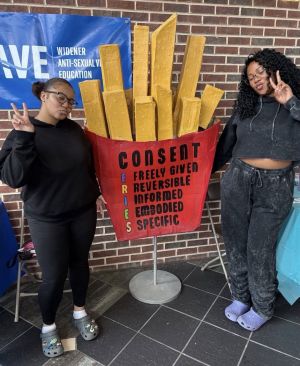
Freely Given: A genuine yes that's free of pressure, manipulation, intoxication, power imbalances, or any other external influence.
Reversible: Anyone can change their mind at any time! Just because someone wanted to do something earlier, it doesn’t mean they feel like it now.
Informed: Everyone should have the full story about what they’re agreeing to.
Enthusiastic / Embodied: Everyone involved is genuinely interested in what’s happening! If someone seems hesitant, pause and talk about it. Notice the signals your body is sending you about whether you feel excited or uncomfortable— and notice the body language of the people you’re around and check in if they seem hesitant!
Specific: Agreeing to something just means you agreed to that one thing! We never want to assume that consent for one activity implies consent for another. Plus, terms like "hooking up" mean different things to different people—consent conversations should be specific!
These five elements help us understand what consent looks like, but practicing them starts with open and honest communication.
Making Consent Conversations Feel More Natural
For many people, starting a consent conversation can feel intimidating or awkward, especially if they haven’t done it before. In WAVE workshops, we address that through lower-stakes practice.
For example, students practice initiating consent conversations through prompts like “Write a question that someone could ask a new partner to learn more about the person’s wants and boundaries before having casual sex.”
Another prompt might be, “Write a sentence someone could use before a first-time hookup to tell their new partner that they don’t like a specific body part to be touched.”
We also emphasize that while starting a conversation can feel awkward at first, trying to guess what someone wants or have someone guess what you want is way more awkward – and every interaction is far more enjoyable when everyone feels comfortable and respected.
And even if your ongoing consent conversation might sound different as you get to know someone better, consent is just as important in long-term relationships as it is in short-term or casual relationships.
WAVE workshops also help students practice consent skills beyond conversation initiation – like figuring out what you want internally, handling rejection and disappointment, and recognizing nonverbal nos.
Consent Is an Everyday Thing
Consent isn’t just about sex. It matters in all relationships, including friendships, roommate relationships, and family relationships!
In fact, practicing consent and setting boundaries with trusted friends can be a great starting point.
Try asking a friend about a boundary they have, or asking before eating some food off their plate or even borrowing their pen! Small moments like these can help make communicating boundaries and respecting someone else’s feel more natural.
Building a Culture of Consent at Widener
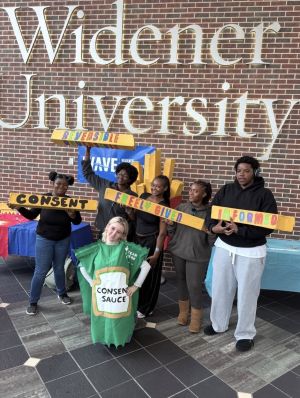
At WAVE, we believe that conversations about consent should be everywhere.
Last school year, WAVE reached over 4,000 participants through 130 interactive, discussion-based workshops (with many students attending multiple workshops). We also partnered with 35 student organizations to help bring these important conversations to more corners of campus.
But building a culture of consent on campus takes all of us. Whether you're practicing how to communicate your boundaries, checking in with a friend, or encouraging others to have these conversations, every action helps create a campus community where everyone feels comfortable, respected, and empowered.
We hope you’ll join us in our mission!
Learn more about consent and preventing sexual violence with WAVE
Jamie O'Leary serves as the Associate Director for Violence Prevention Education at Widener University. In her role, she educates students, faculty, and staff on topics such as practicing consent, seeking help, and cultivating healthy relationships. Jamie has played a key role in expanding Widener's sexual violence prevention programs and aims to spread these vital conversations across our campuses.